Stacks, Not Tracks: Why the Sound System Is the Real Backbone of British Bass
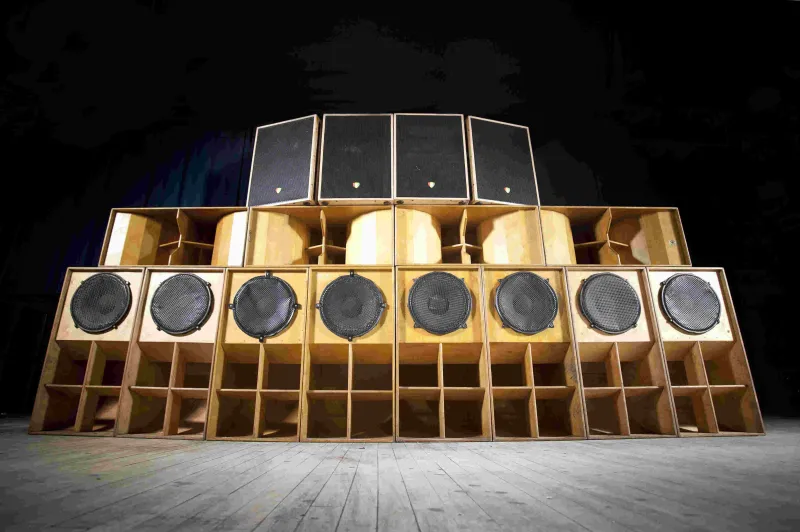
Photo: massive hand built speaker stack sound system reggae dub uk, via i.pinimg.com
Ask anyone what bass music is and they'll probably name a track. A tune. A drop. But spend an evening down the front of a proper sound system — the kind built by hand, bolted together in a lock-up and tuned by ear — and you'll realise the truth. The music is only half the story. The other half is the stack it's coming out of.
From Kingston to Ladbroke Grove
The story starts, as so much of British music culture does, in Jamaica. When the Windrush generation arrived in the UK through the late '40s and '50s, they brought more than suitcases. They brought the blues dance tradition — parties built around a operator's custom rig, where the system itself was the headline act. A sound wasn't just equipment. It was a name, a reputation, a crew.
By the '60s and '70s, that culture had taken root in Notting Hill, Brixton and St Paul's in Bristol. Notting Hill Carnival grew out of it, and so did a homegrown scene of British-built systems playing reggae and dub. Names like Channel One and Jah Tubbys carried the torch, and crucially, a new generation of UK builders started making their own boxes — adapted for British rooms, British weather and British basements.
The Free Party Inheritance
Fast forward to the late '80s and '90s, and the sound system ethos collided with acid house and jungle. Free parties and traveller gatherings took the same blueprint — mobile rigs, secret locations, music played loud enough to feel it in your chest — and pointed it at a new generation. The tech changed, the tempo changed, but the philosophy didn't: the system belongs to the people who built it, and nobody's charging you on the door of a field at 4am.
Jungle and then dubstep were both born on systems. It's no accident that dubstep's spiritual home was a room in Croydon where the low end could actually breathe, or that jungle's breakbeats were engineered to slap on a big stack rather than a pair of headphones. Producers made mixing decisions based on how a tune would sound through horns and scoops. The stack shaped the music, not the other way round.
The People Who Build the Boxes
To understand how much of this survives today, I spoke to builders and operators still flying the flag — the folk who spend weekdays sanding MDF and weekends lifting it into vans.
One system operator from the Midlands put it plainly: "People think a sound system is speakers. It's not. It's a crew, it's a tuning philosophy, it's knowing your room. Anyone can buy a rig off the shelf. Building one teaches you what bass actually is."
That hands-on knowledge is the through-line. Traditional builders still use horn-loaded designs and folded scoop bins descended directly from Jamaican designs, tuned for warmth rather than sheer SPL. Modern festival rigs might run DSP and line arrays, but walk the front of a stack at Boomtown or a Carnival sound court and you're hearing the same principles: efficiency, weight, and a midrange that pushes through rather than washes over.
Why It Still Matters
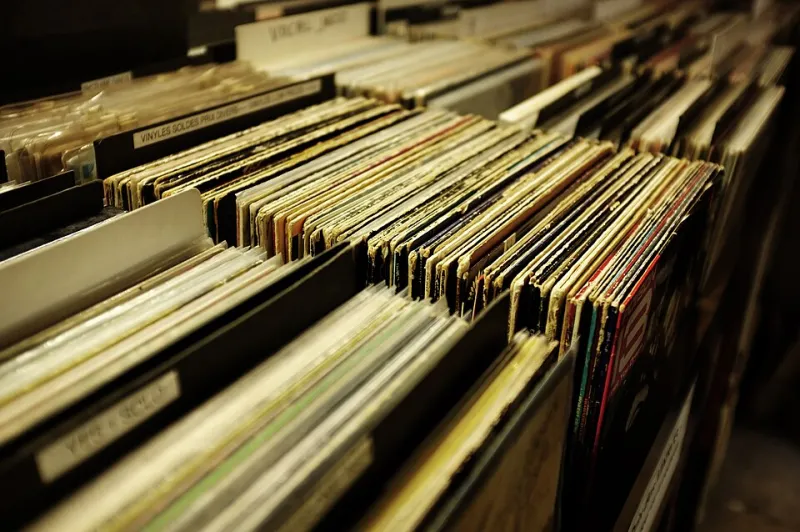
There's a temptation to treat sound system culture as heritage — something to be respectfully referenced while the actual action happens on laptops and streaming platforms. But look closer and the culture is very much alive. Grassroots systems are popping up in warehouse scenes from Manchester to Glasgow. Vinyl-only dub sessions run weekly in cities up and down the country. Young producers are booking 'system sessions' to test dubs before release, exactly as their forebears did.
And there's a lesson in it for anyone making bass music right now. The wobble, the sub-bass, the weight that defines UK bass — none of it was invented in a DAW. It was invented in a dance, on a rig, by people obsessed with making a room move. Every producer who checks their low end on a big system before mastering is participating in that lineage whether they know it or not.
Keep the Culture Loud
If there's one takeaway, it's this: support the systems, not just the scene. Go to the Carnival sound courts. Find the grassroots nights running proper rigs. Buy a ticket from the crew who built the boxes rather than the platform that booked the headliner. The tracks will keep coming — that part takes care of itself. But the culture that shaped them only survives if people keep showing up, standing in front of the stack, and letting the low end do the talking.
Because in British bass, the tune is temporary. The tradition is the foundation. And the tradition sounds like four-foot scoops, hand-wired crossovers and a room full of people feeling exactly the same pressure wave at exactly the same time. Long may it rumble.