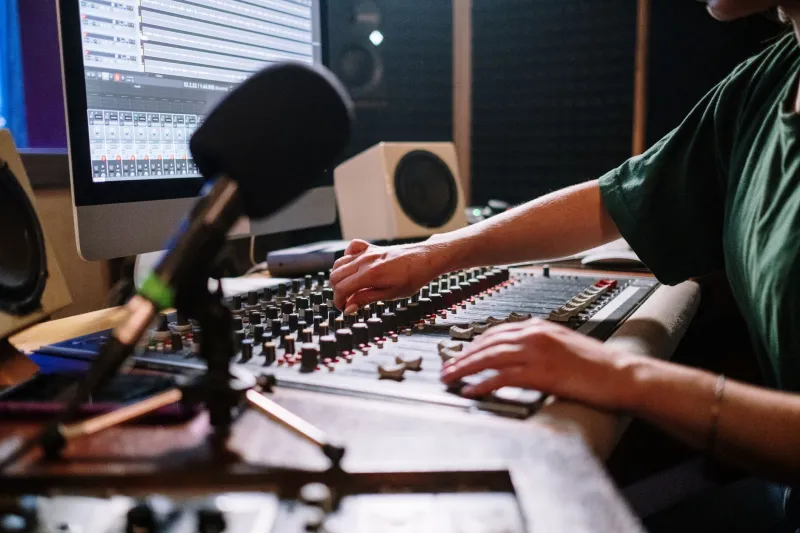
Sweaty by Teatime: Inside the Sunday Sessions Where UK Bass Does Its Thinking

There's a specific kind of Sunday that doesn't make it onto many flyers. Doors at four, done by half eleven, a crowd of knowing faces who've been coming every fortnight since before the DJ on the bill had a manager. No phones in the booth, no pressure on the numbers, and a box of unmarked 45s that haven't been heard by anyone outside the studio they were cut in.
This is the groundhog day sweat — the daytime session — and if you ask the people who actually make UK bass move, it's the closest thing the scene has to a research lab.
Why Sunday Works
Talk to promoters and the same reasoning keeps coming up: Sunday strips away the performance. Saturday nights carry weight. Tour support slots carry weight. But a Sunday afternoon in a pub back room in Chapeltown or a rail arch off the Hackney borders? Nobody's trying to prove anything.
"It's the only crowd that'll tell you the truth," says one Leeds selector who runs a monthly session that's been going nine years. "If a dub dies on a Sunday, it's dead. If it rewinds, you know you've got something. There's no alcohol fog, no 2am goodwill. Just people who came specifically to listen."
That's the quiet genius of the format. The regulars aren't there for a night out — they're there for the music itself, often nursing a pint and a roast they'll eat at nine. They've heard enough sets to spot a test press from a filler track in one bar. Feedback is instant, honest and unpaid.
The R&D Lab Nobody Books
Plenty of the biggest bass tracks of the last few years did their first laps in rooms like these. A dub gets tested on a Sunday, tweaked on the Monday, re-cut, then dropped properly a month later to a crowd that thinks it's brand new. By then, the Sunday crowd has already voted.
Selectors describe it as a pressure valve, too. You can play a 45-minute set of pure experimentation at 5pm in front of forty heads and take real risks you'd never gamble on a peak-time Saturday. Some of the best transitions in UK bass — the weird tempo pivots, the half-time detours — were born in low-stakes daytime rooms where the worst case scenario was a shrug.
Where to Find Them
The format thrives precisely because it's unglamorous, but a few institutions have earned their keep:
- Leeds — the back-room sessions around Chapeltown and Hyde Park, where student turnover keeps the crowd curious and the soundsystem heritage runs deep.
- Bristol — Sunday beach-bar and warehouse hybrids along the water, where dub, bass and everything adjacent gets aired with the sun technically still up.
- London — rail arches and pub rooms from Peckham to Tottenham, the natural habitat of the 4pm-to-close sweat.
- Manchester and Glasgow — smaller scenes, tighter crowds, and some of the most loyal regulars in the country.
The rules of engagement are simple if you're thinking of dipping a toe in: turn up early, buy a drink, and don't film the booth. These rooms run on trust. The unmarked dub you hear at half five might be someone's entire year of work.
Keep It That Way
There's a temptation, as these sessions grow, to professionalise them — to book bigger names, push tickets, chase the algorithm. The promoters we spoke to mostly resist it. The whole value of the Sunday sweat is that it exists outside the economy of hype. No clips, no content, no metrics. Just a system, a crowd that knows its stuff, and a selector brave enough to find out if the new cut actually works.
Saturday night is where bass music gets celebrated. Sunday afternoon is where it gets decided. Long may the sweat run.