The Youth Centre Echo: Inside the Disappearing Rooms Where UK Bass Gets Its Start
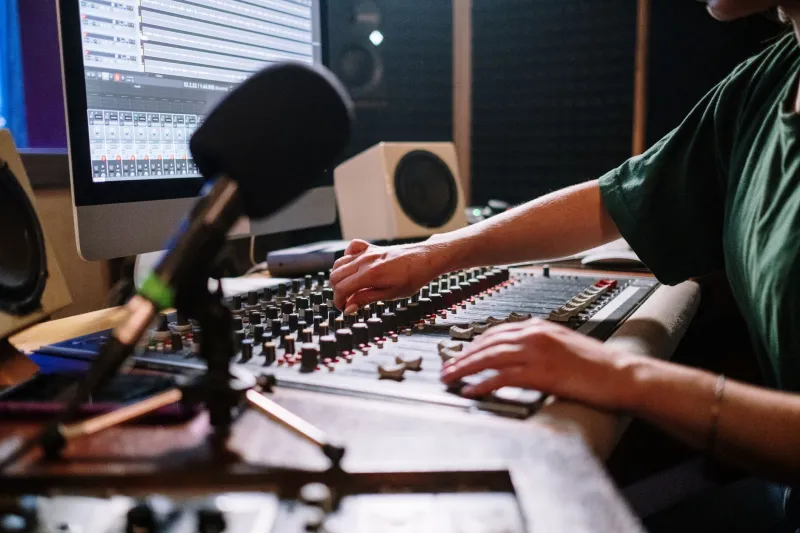
Nobody makes their first wobble in a fancy studio. Ask any producer worth their salt where it started and you'll get the same answers: a youth centre in Croydon with a knackered pair of KRKs, a college music tech room that smelled of Lynx and energy drinks, a mate's nan's back bedroom in Luton. The origin story of UK bass isn't glamorous — it's a story of cheap rooms and borrowed time.
The £8-an-Hour Problem
Talk to studio managers right now and the mood is grim. A producer who goes by Sesh — real name withheld because he still runs a night in Peckham — manages a shared production hub in South London. Five years ago, his lock-ups went for £90 a week. Today? "I've got people paying £250 for the same desk, same monitors, same dodgy kettle. Rates are up, but the punters aren't. They're kids on Universal Credit making dubstep."
The maths is brutal. Studio time in major cities has climbed while the money coming in from streaming is, generously speaking, pocket change. The result is a generation of producers who can release a track on a respected label but still can't afford a second session to fix the mixdown.
Where the Craft Actually Gets Passed On
There's a myth that production is a solo pursuit learned off YouTube. Anyone who's spent time in a proper hub knows different. You learn by sitting behind someone's shoulder while they wrangle a snare. You learn when an older producer tells you your low end is a mess and shows you why.
That's the stuff that only happens in shared spaces. Youth centres like the ones that raised half of East London's grime and bass lineage — think of the rooms behind the projects that gave us everyone from the Bow lot to the current wave of Bristol graduates — were never just buildings. They were apprenticeships that nobody had to enrol in.
"I learned more in six months at the centre than I did in two years of an online course," says Tia, a producer from Leeds who's just had her first 12-inch picked up by a Leeds bass label. "Someone literally turned my kick down and turned my sub up and my life changed. You can't get that from a tutorial."
The Closures Are Already Here
The numbers make uncomfortable reading. Council youth service budgets have been hollowed out for over a decade, and music provision — never a statutory requirement — is usually first against the wall. College music tech courses have been culled as funding shifts towards subjects that look better on a spreadsheet.
Meanwhile, commercial studios that once offered off-peak rates to young producers are being converted into flats. It's not a conspiracy; it's just property economics. A room full of acoustic treatment doesn't pay a landlord what a studio flat does.
Sesh puts it bluntly: "Every time one of these rooms shuts, you lose maybe twenty producers. Most of them would've packed it in anyway, sure. But one or two of them are the real deal. That's the future of the scene getting binned for a redevelopment."
Who's Fighting Back
It's not all doom. Community interest companies and music charities have stepped into the breach in a lot of towns — studios attached to venues, after-school production clubs, equipment libraries that lend out interfaces and monitors like a council library lends books. Some labels have started funding practice rooms directly, recognising that A&R starts long before the demo lands.
There's also the DIY model that UK bass has always excelled at. Shared hubs, timeshare setups, a producer collective renting one room and splitting it six ways. It's scrappy and it's fragile, but scrappy and fragile is basically the genre's founding condition.
Why Any of This Matters to a Raver
Here's the thing. You might never set foot in a youth centre studio, but you've absolutely danced to the product of one. The tracks that tear the roof off a club night in Manchester or a carnival session in Notting Hill didn't materialise from nowhere. They came out of rooms that cost next to nothing and gave somebody everything.
If we let those rooms disappear, we don't just lose producers. We lose the pipeline. The sound gets narrower, the same ten names make the same ten tracks, and the culture eats itself. Bass music has always been at its best when it sounds like it came from somewhere — a place, a postcode, a room with terrible ventilation.
Protect the practice rooms. The bangers will follow.